


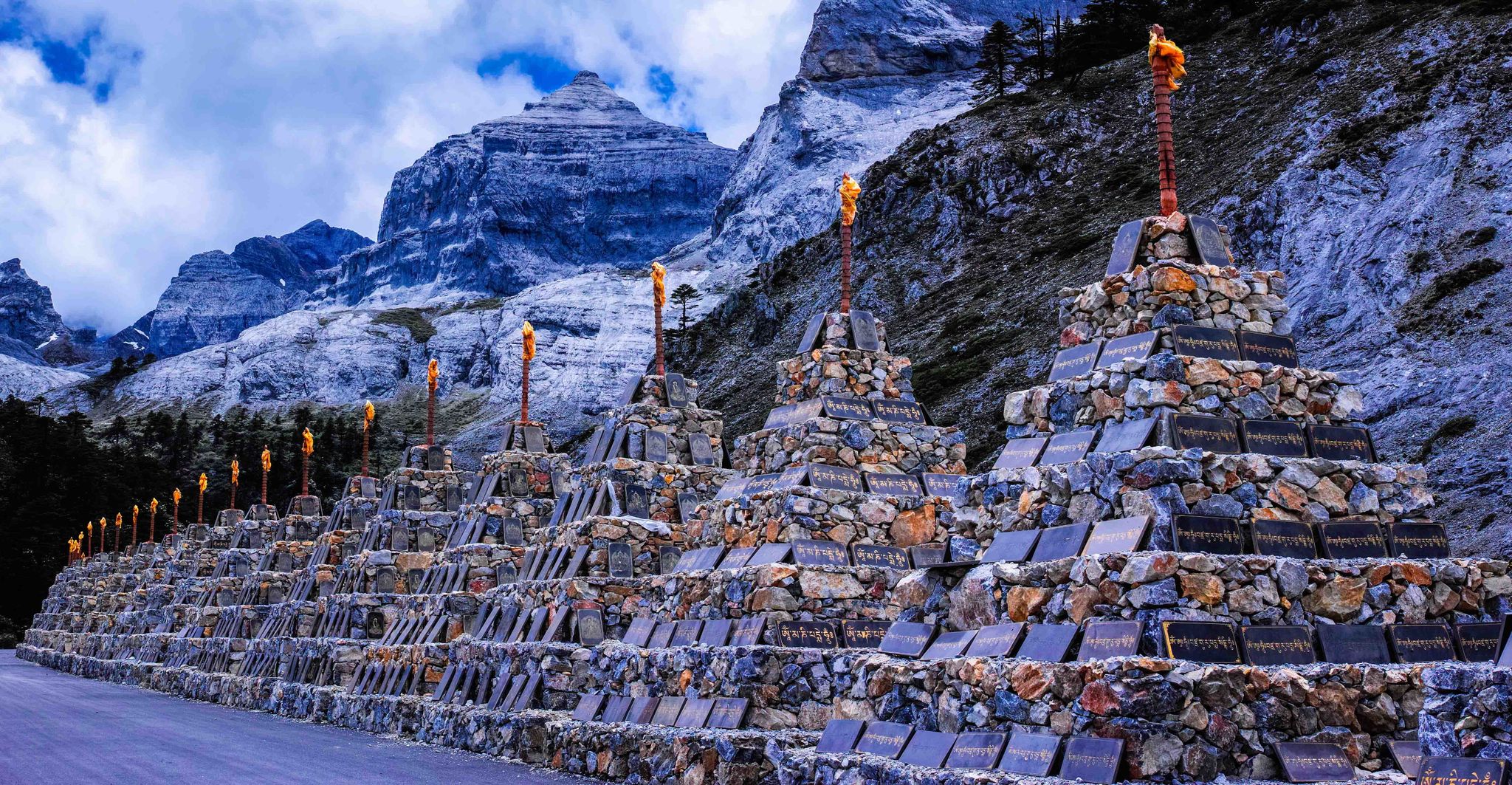






Where Prayer Flags Flutter Beneath Snow-Capped Peaks
Yunnan is a land of striking contrasts — snow-capped mountains and deep river valleys, ancient villages and living cultures —woven into one of China’s most captivating regions.
On the edge of the Tibetan Plateau , Shangri‑La is known for its highland scenery, Tibetan traditions, prayer flags, sacred peaks, and quiet valleys, where nature and spirituality remain closely intertwined.
Balagezong sits within this extraordinary landscape: a remote mountain realm of towering summits, dramatic gorges , vibrant Tibetan heritage, and enduring Shambhala legends . This journey offers a glimpse into Shangri‑La’s hidden soul, where breathtaking scenery and cultural memory meet.
Our Itinerary
1-Day Trip
Balagezong Scenic Area
A hidden paradise in the deep valleys of Shangri-La
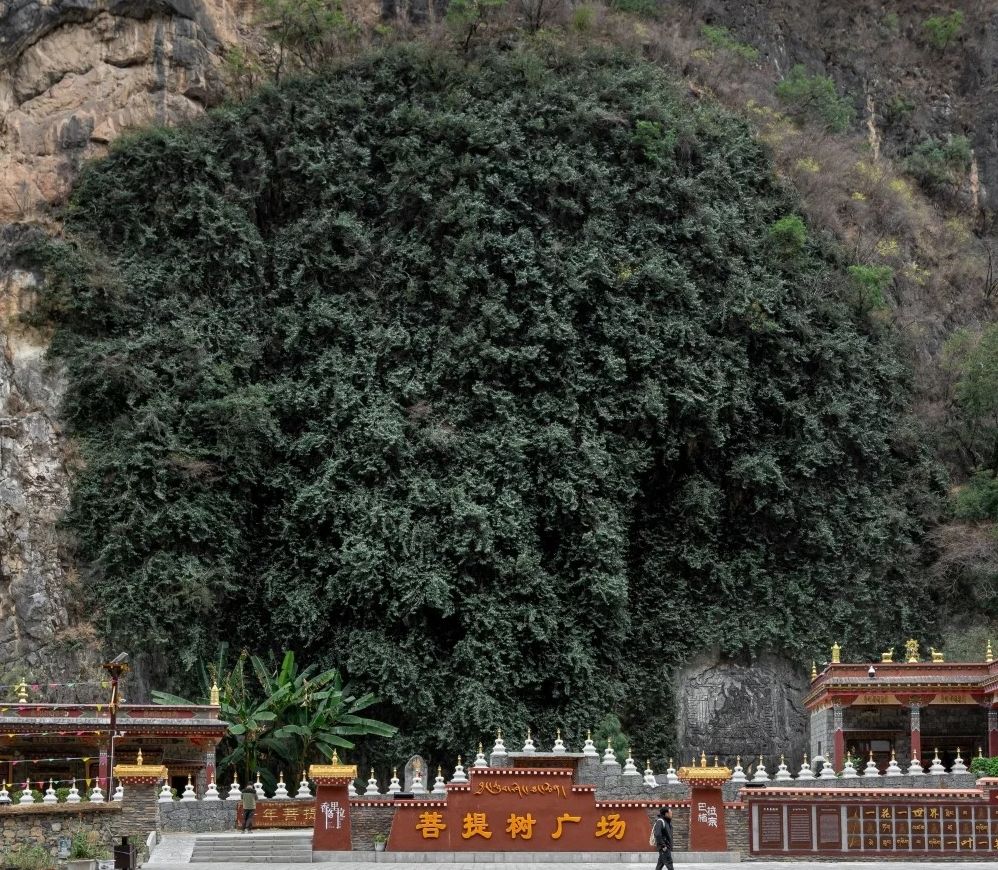
Where Yunnan, Sichuan, and Tibet meet, Balagezong is the real-world “ Blue Moon Valley ” of Lost Horizon, rising from a 2,000-meter gorge to snowline above 4,000 meters in a day. At the gate, pilgrims still circle a 3,000-year-old Bodhi tree rooted in stone.
Beyond it the road climbs past eight sacred peaks set like lotus petals and Zhuoma Lhakhang’s twenty-one Taras . At 3,200 meters, the Echo Wall’s boardwalk ends at a glass platform where shouts return threefold . Higher still stands the Shambhala Stupa , at 4,000 meters.
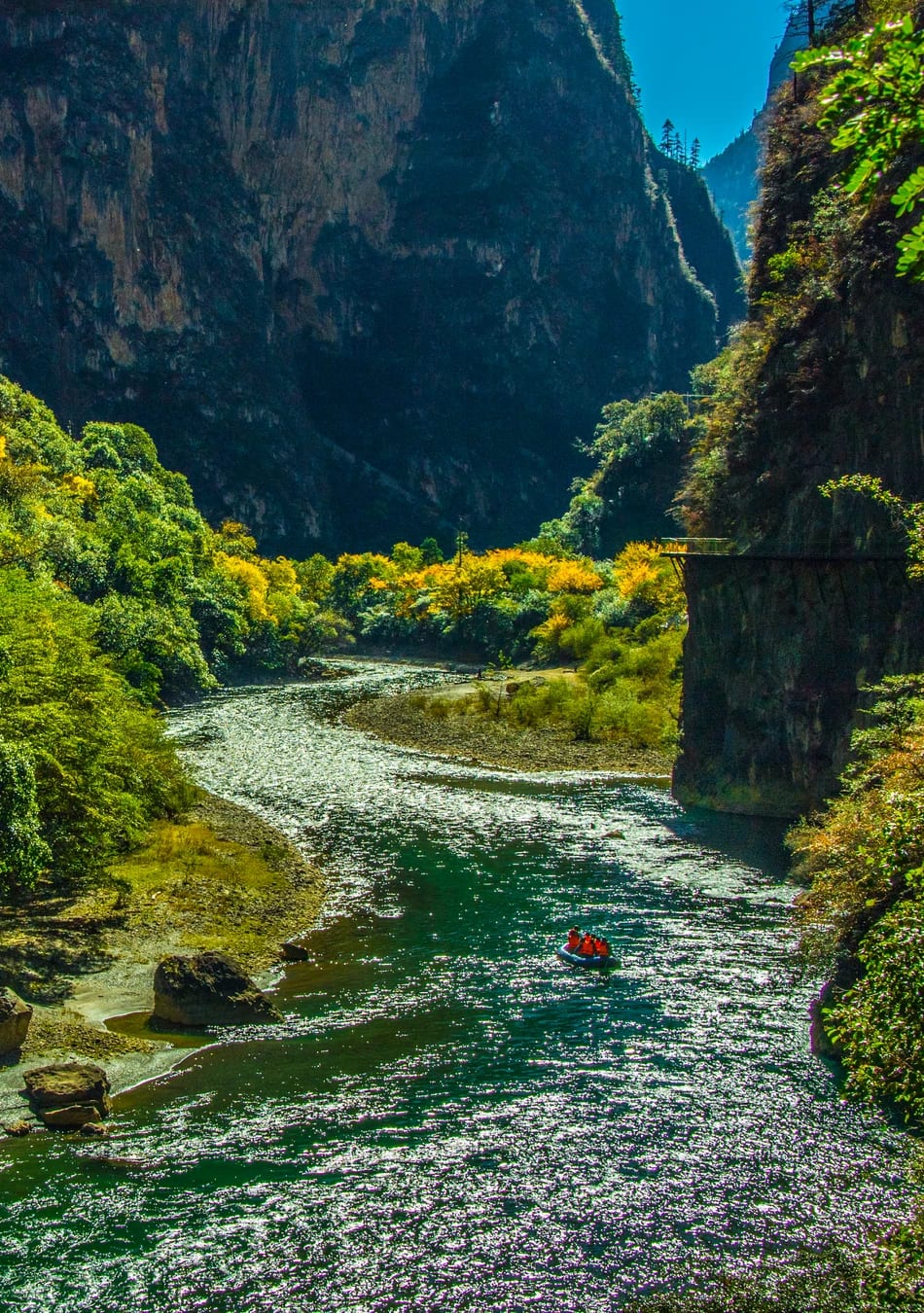
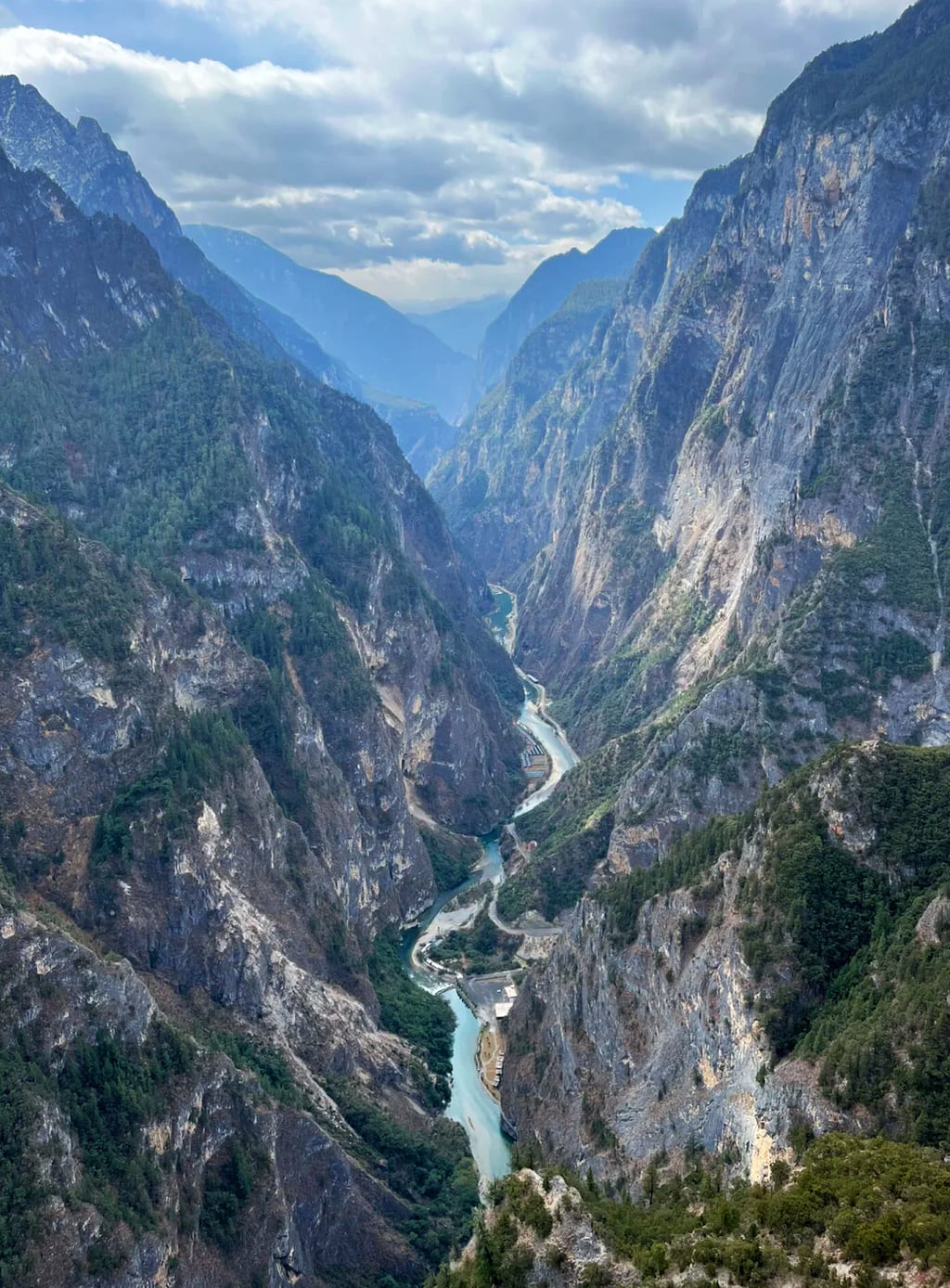
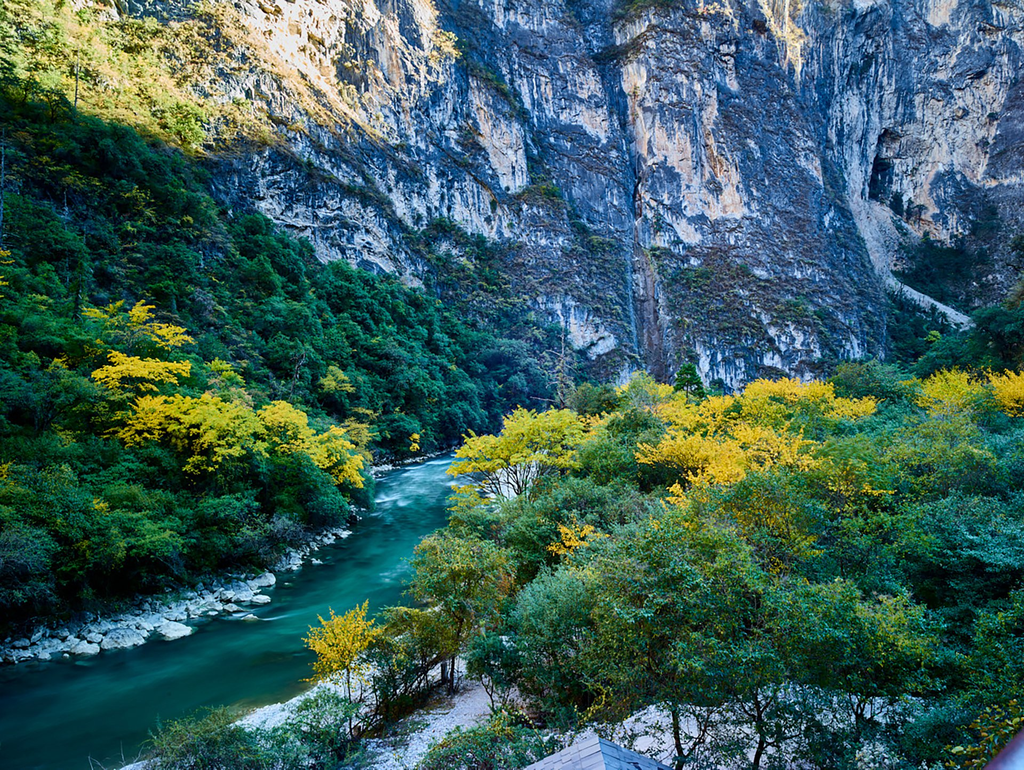
Out of nowhere, the road drops into everyday life. At 2,900 meters, 1,300-year-old Bala Village still keeps its rammed-earth watchtowers, prayer flags, and mani stones; one farmhouse is now a café. Below, the Shangri-La Grand Canyon runs 2,500 meters along turquoise meltwater between sheer walls—gorges within gorges.
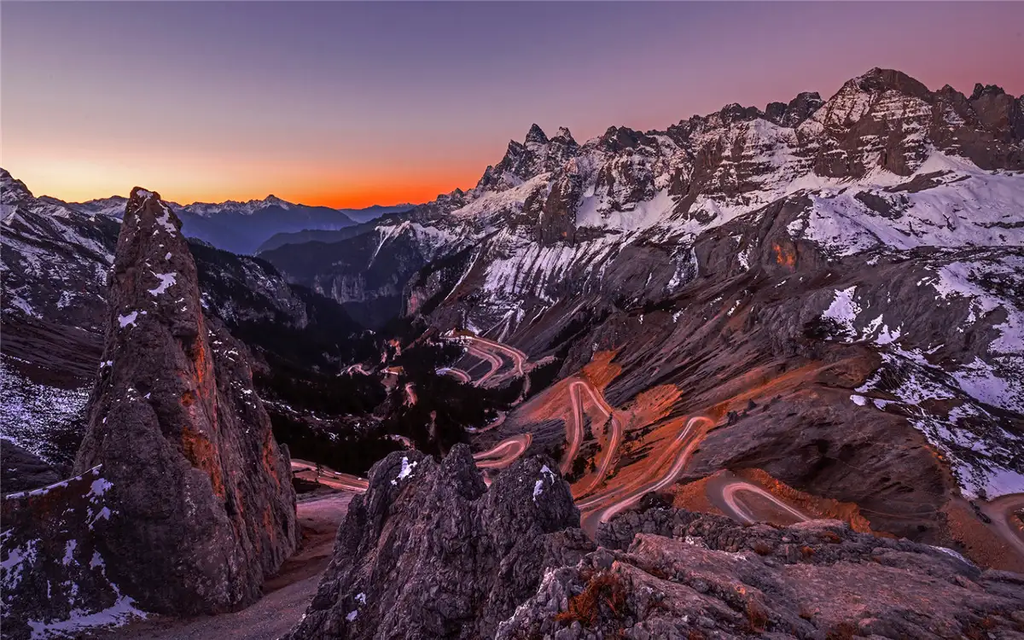
Yet what lingers is a person, not geology. Sina Dingzhu left at thirteen with 35 yuan . Years later he sold everything to build a 35-kilometer road home. The “ 108 Bends to Heaven ” opened in 2008, ending centuries of isolation. Now arriving feels less like reaching a destination than being welcomed in.
Bodhi Tree of Balagezong
A 3,000-Year-Old Sacred Tree Watching over the Valley
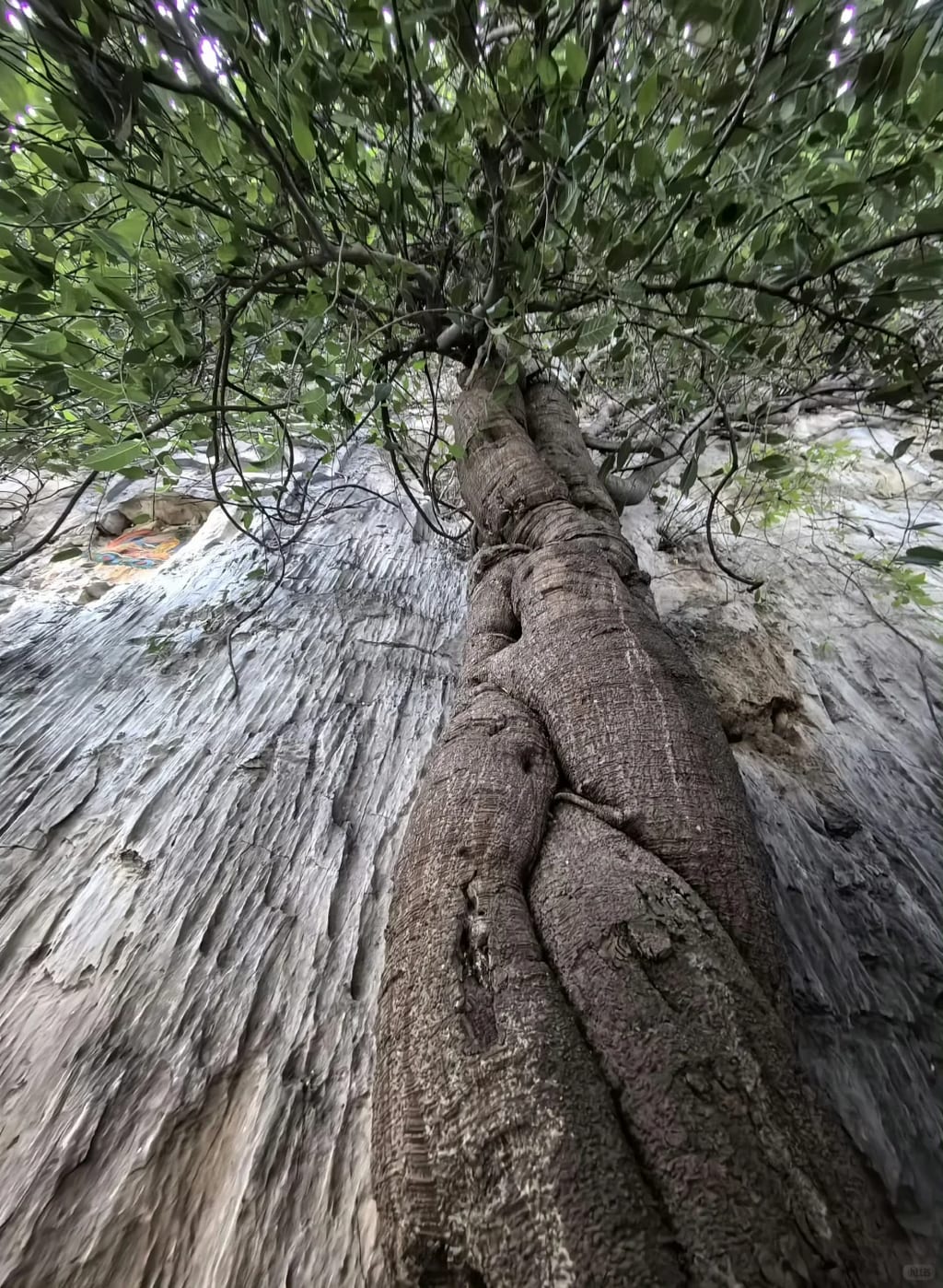
At Balagezong, the ancient Bodhi Tree, known locally as the “Phoenix Bodhi Tree” . Over 3,000 years old , it clings to a cliff, roots reaching into rock cracks. Unlike a typical Bodhi tree growing in open ground, it seems to embrace the mountain, drawing strength from stone, wind, and time.
This tree is more than a landmark. In local belief, the Bodhi tree symbolizes wisdom, awakening, protection, and blessing . At the entrance, it feels like a guardian of the valley—witness to centuries of wind, prayer, and mountain life.
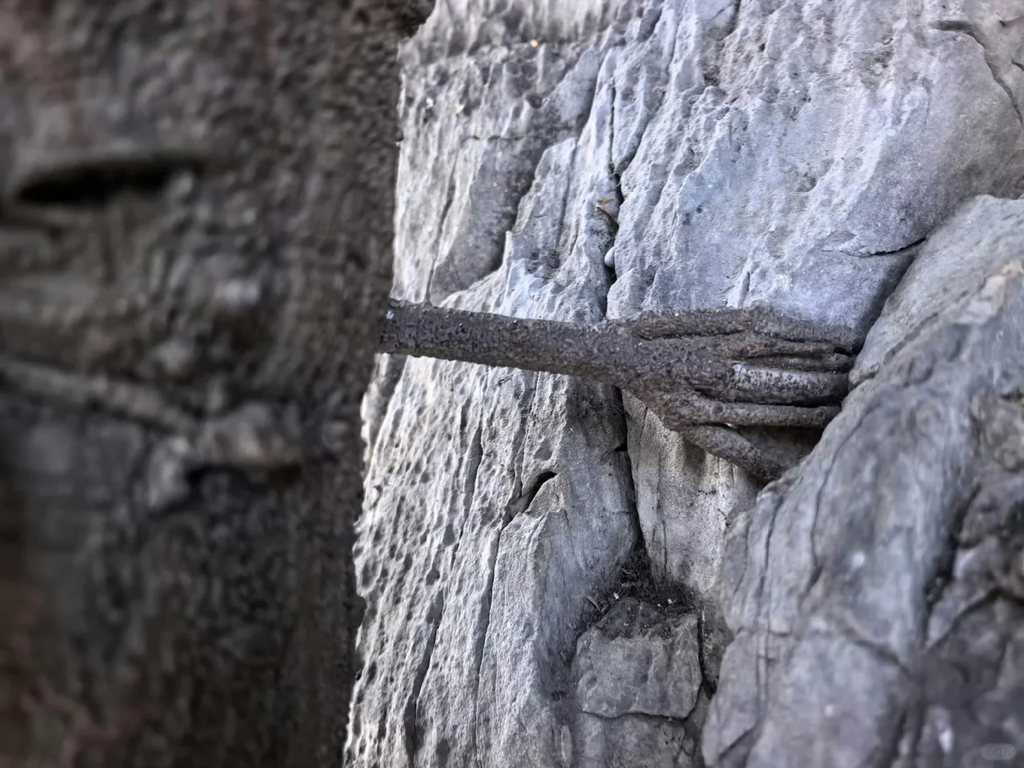
One of its most striking features is a naturally formed branch resembling a “Buddha’s hand” . The branch and aerial roots extend into the cliff like fingers gripping the rock, creating a rare, almost mystical scene. Locals see it as a sign of good fortune, protection, and wishes coming true , and many visitors pause to take photos, make a quiet wish, or simply admire nature’s uncanny artistry.
More than a tree, the Bodhi Tree offers an introduction to the valley’s spirit—where nature, Tibetan belief, sacred mountains, and legend are intertwined. It creates a calm moment before the journey continues into Balagezong’s dramatic gorges, snow peaks, villages, and highland scenery.
Bala Village (Balagezong)
A Thousand-Year Tibetan Village Hidden in the Mountains of Shangri-La
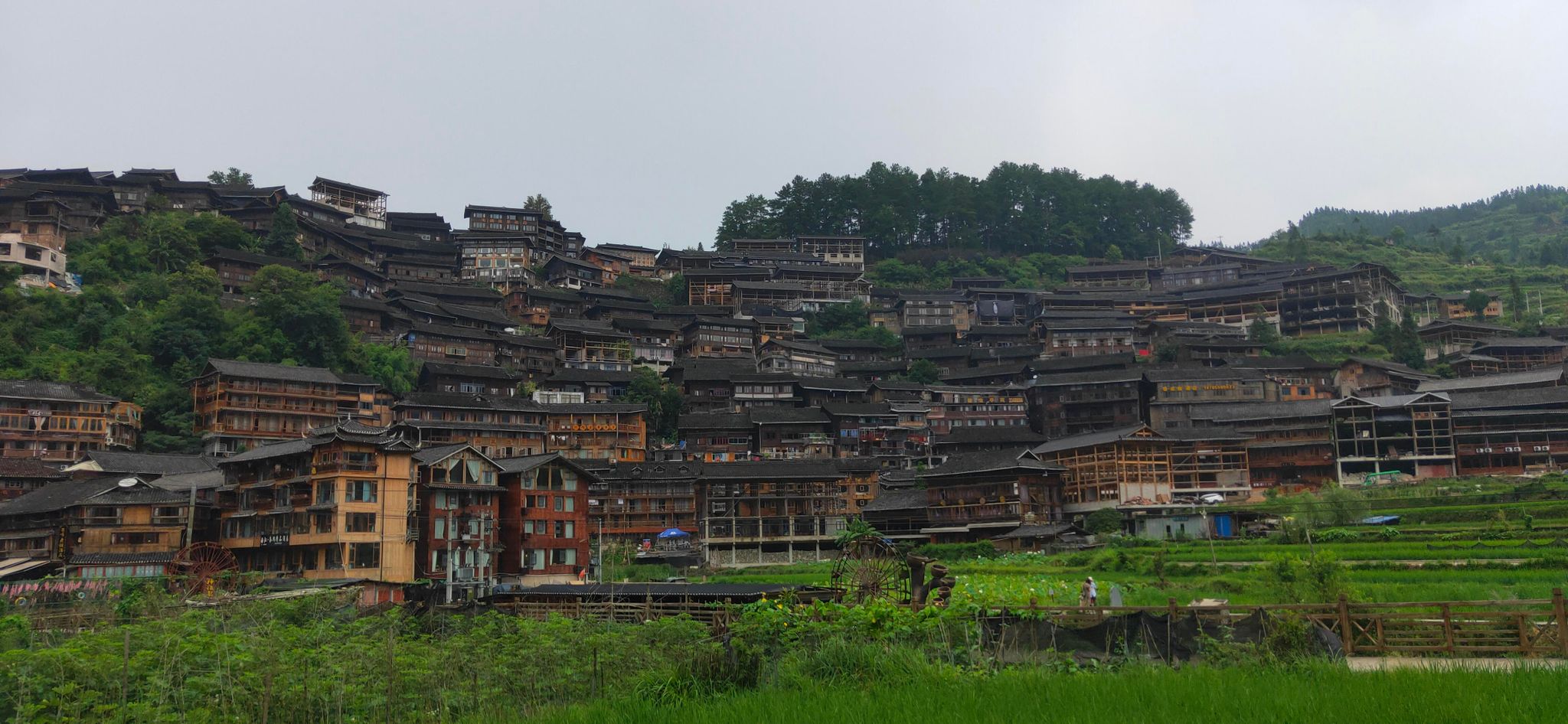
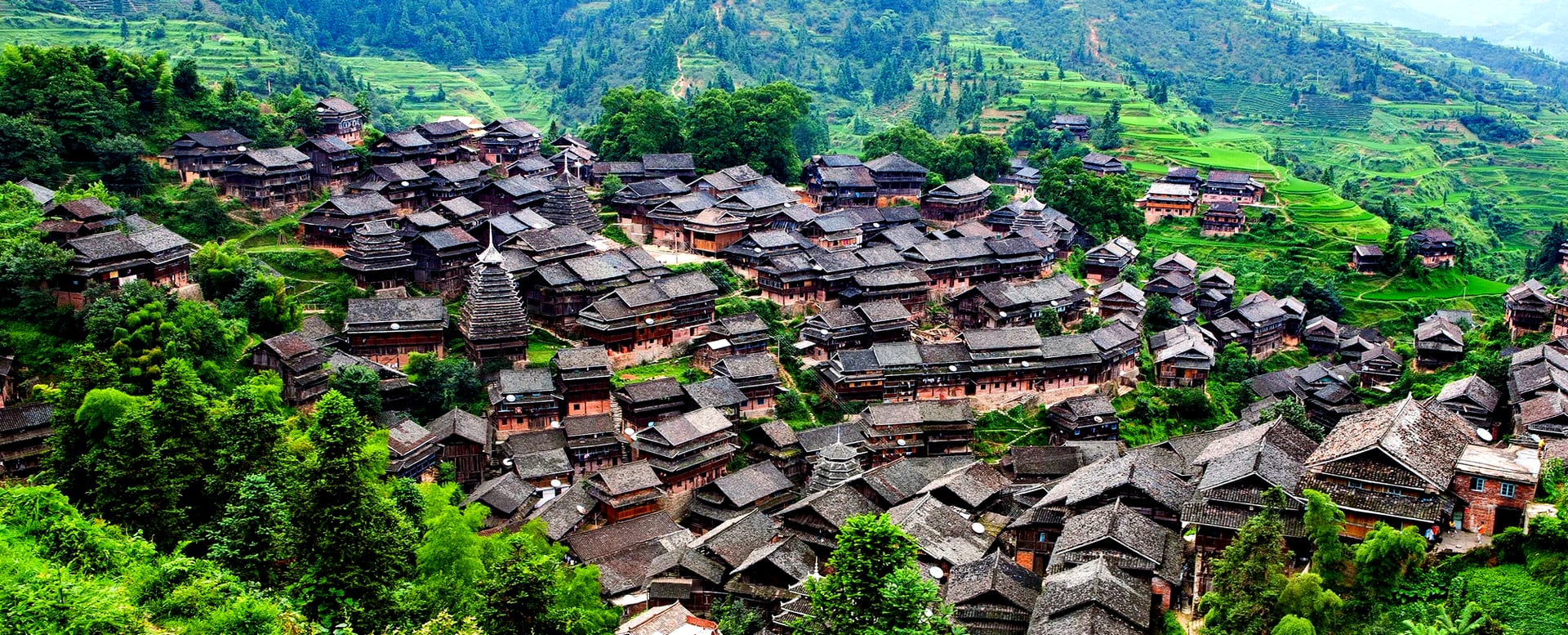
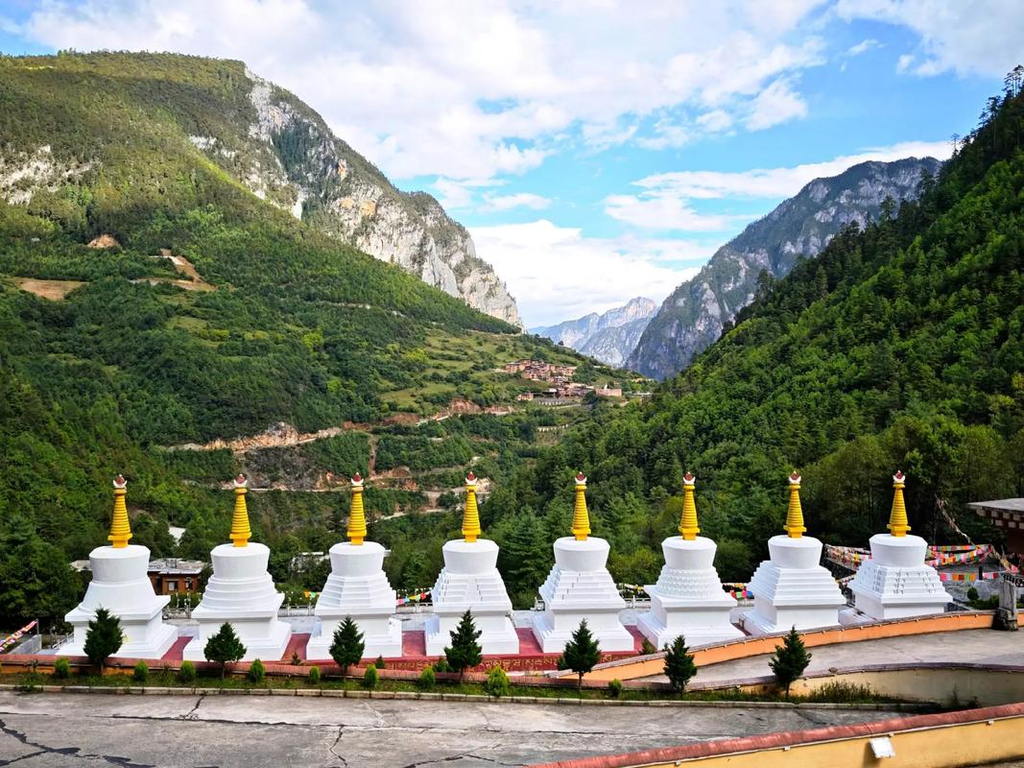
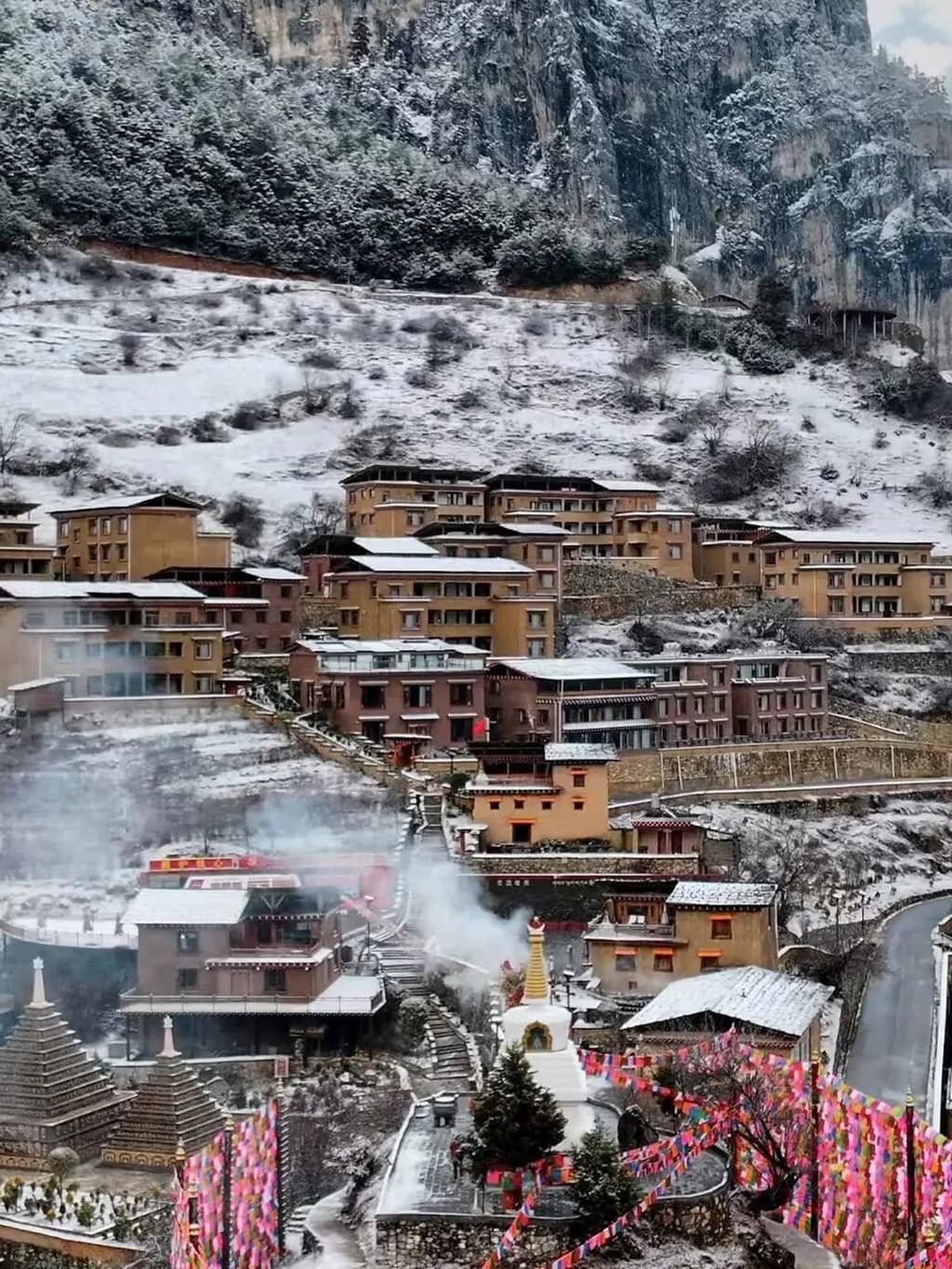
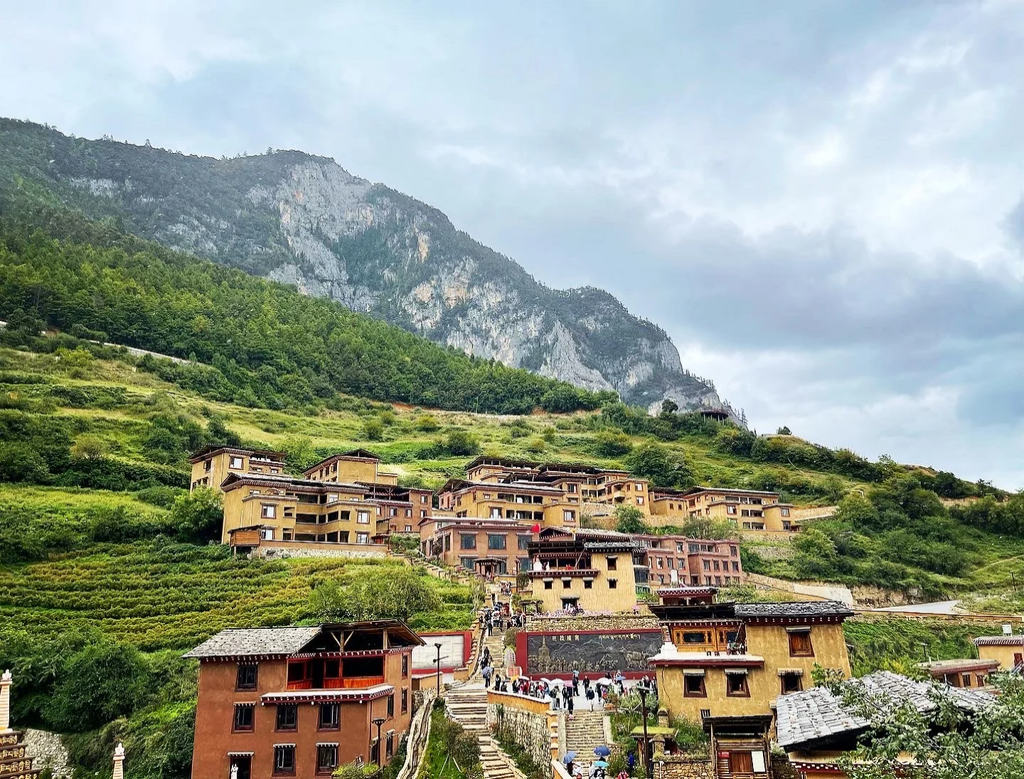
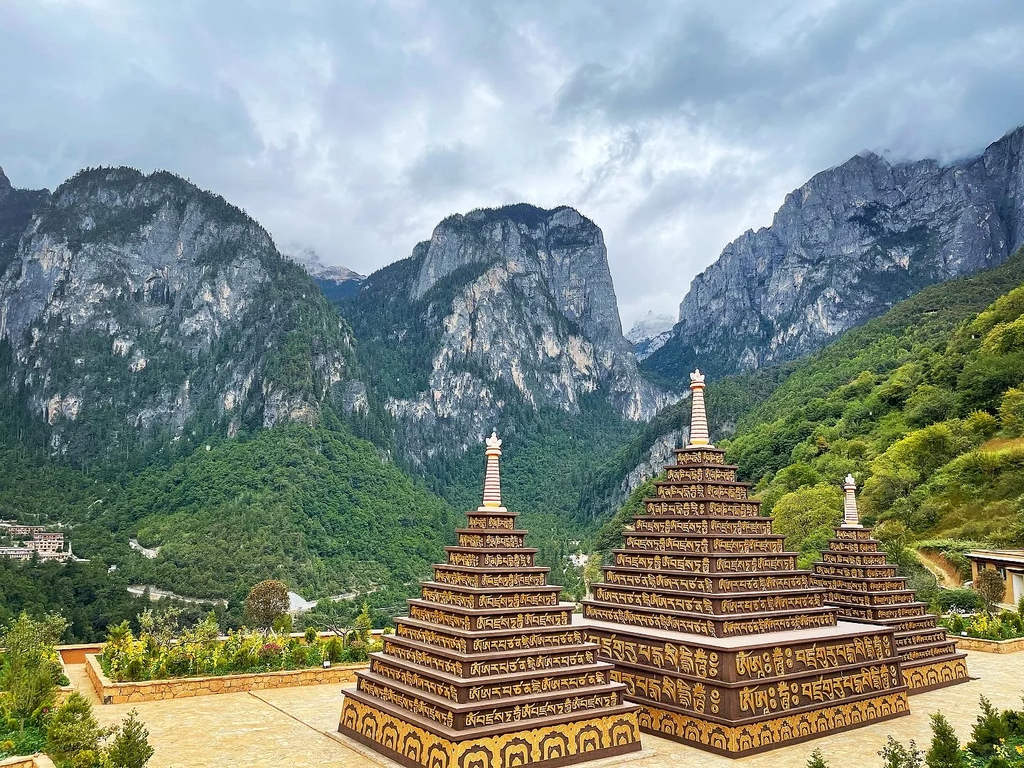
Set within Balagezong Scenic Area , Bala Village is a quiet settlement framed by snow-capped peaks, forests, valleys, prayer flags, and white stupas. Described as a thousand-year-old village , it preserves a highland community shaped by faith, migration, and life.
Unlike a commercialized old town, Bala Village feels calm, lived-in, and connected to its landscape. Traditional Tibetan wooden houses are layered along the slope, while mani stones, prayer flags, and small stupas add a sense of Tibetan spirituality. From the village, travelers can look toward the sacred Balagezong Snow Mountain .
As part of the wider Balagezong route, Bala Village offers a gentler cultural counterpoint to the region’s dramatic canyons and high-altitude scenery. It’s best enjoyed at an unhurried, reflective pace . Plan around 30–60 minutes for photos, a slow stroll through the village lanes, and a simple meal break with local flavors. If you have more time, Bala Village can also serve as a cultural anchor , helping visitors better understand the area’s connections between nature, belief, ancestral memory, and the search for an ideal homeland.
Shambhala Stupa
A Natural Snow Stupa Hidden in the Sacred Mountains of Balagezong
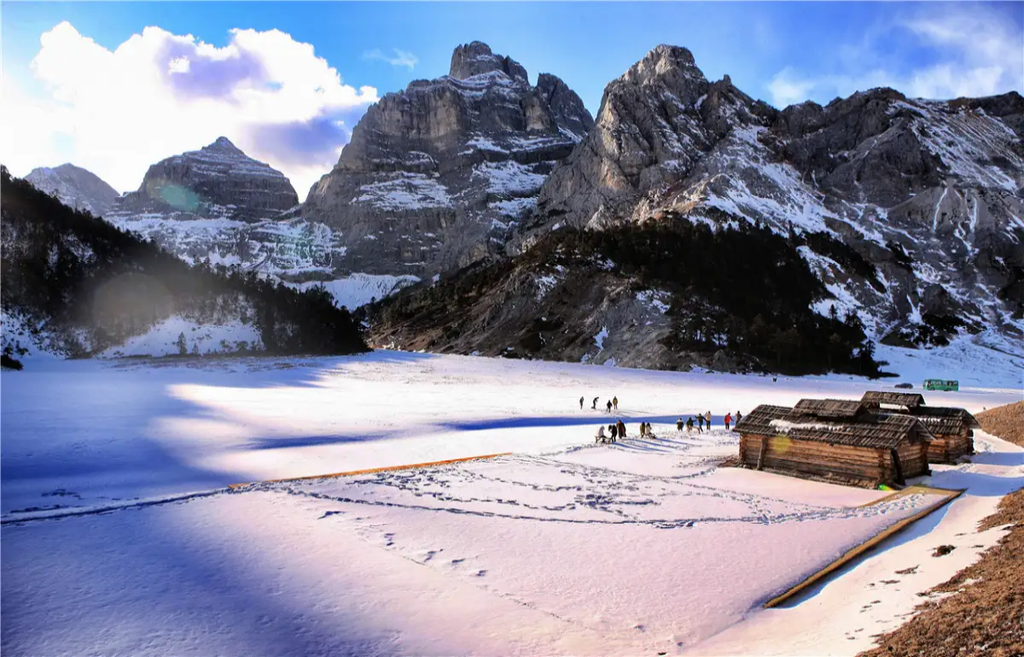
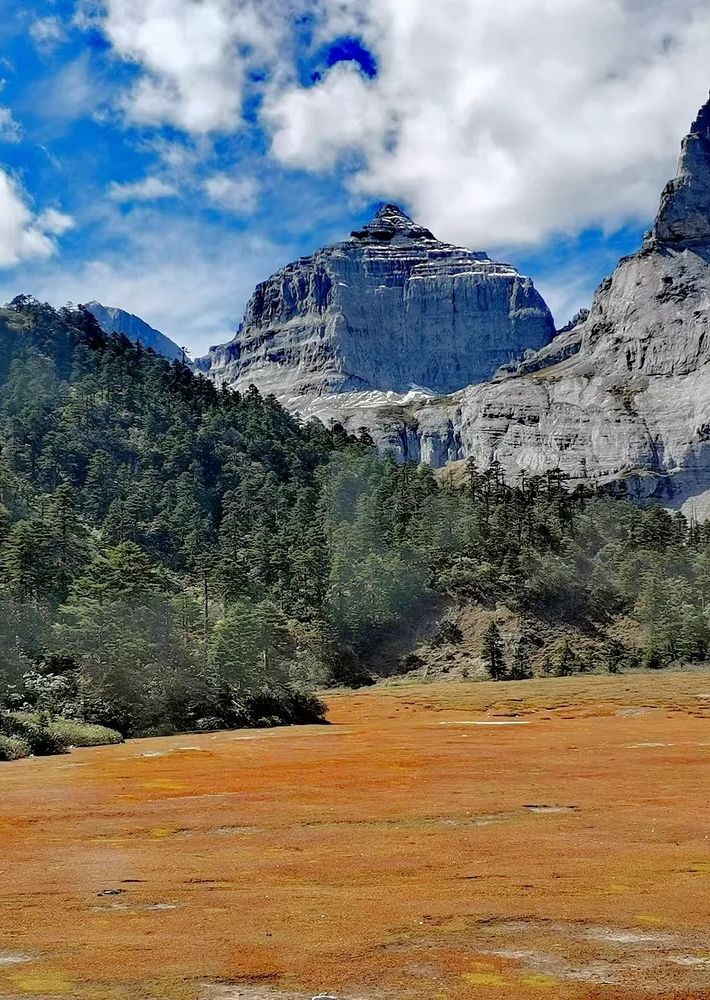
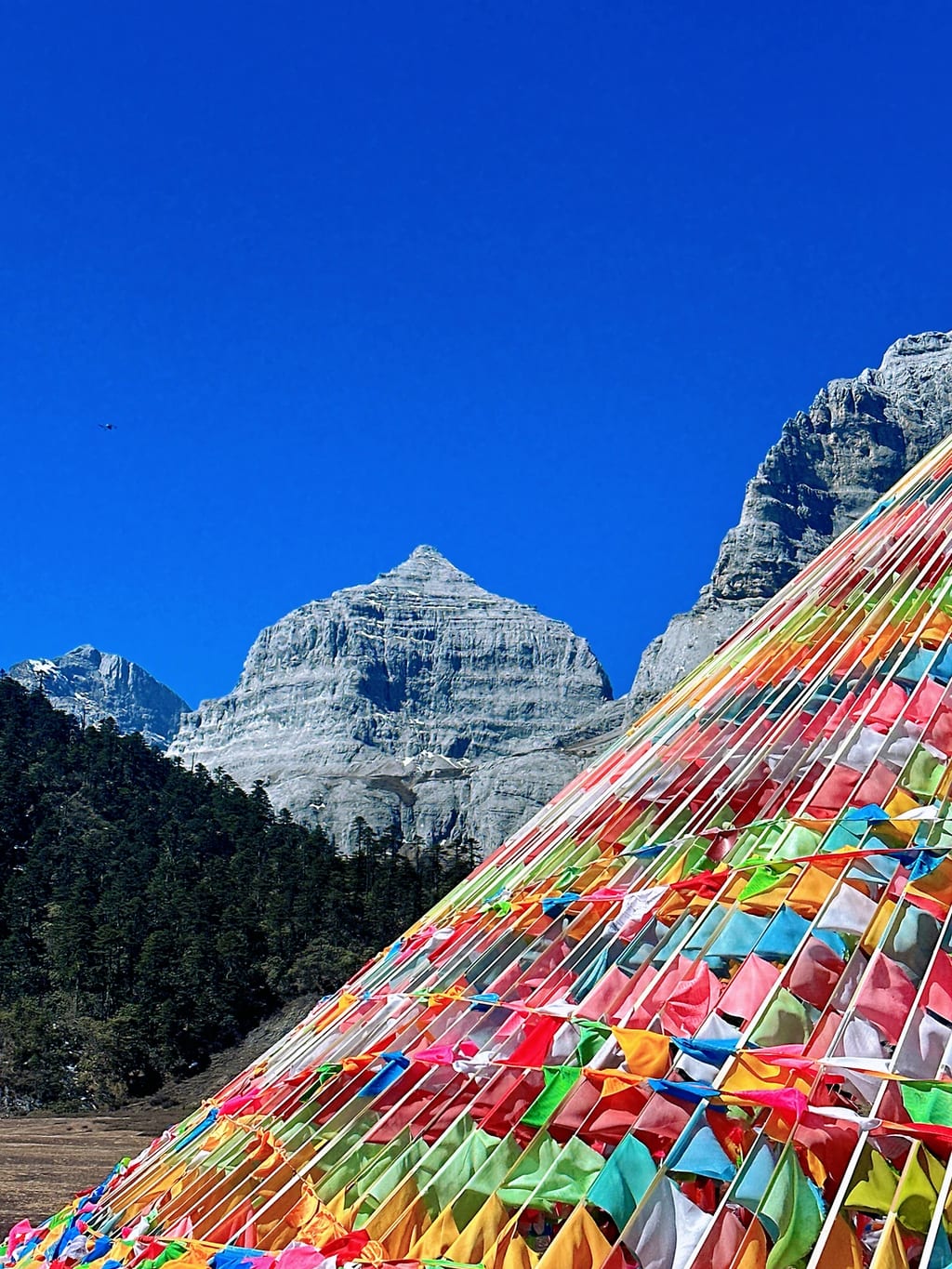
Within Balagezong Scenic Area , northeast of Gezong Snow Mountain , Shambhala Stupa ranks among Shangri-La’s revered natural landmarks. It is not man-made, but a naturally formed, pyramid-shaped snow peak rising to around 4,200–4,250 meters above sea level.
With its white summit and solemn silhouette, the peak resembles a Tibetan Buddhist stupa against the sky. In Tibetan tradition, it is linked to “Quden,” meaning stupa , and is regarded locally as a rare sacred site connected to legendary Shambhala .
The site’s meaning comes from surrounding peaks. Beside the stupa-like mountain, one peak appears like a lama seated in meditation , while another resembles an unfolded scripture . Together, the three forms are understood as the “Three Jewels” — Buddha, Dharma, and Sangha .
The journey to Shambhala Stupa is part of the experience. Visitors ascend mountain roads, passing villages, prayer flags, valleys, and snowy vistas. As altitude increases, surroundings grow quieter and more solemn, creating a spiritual contrast to canyon scenery below.
Echo Wall (Balagezong)
Where Voices Return from the Cliffs of Shangri-La
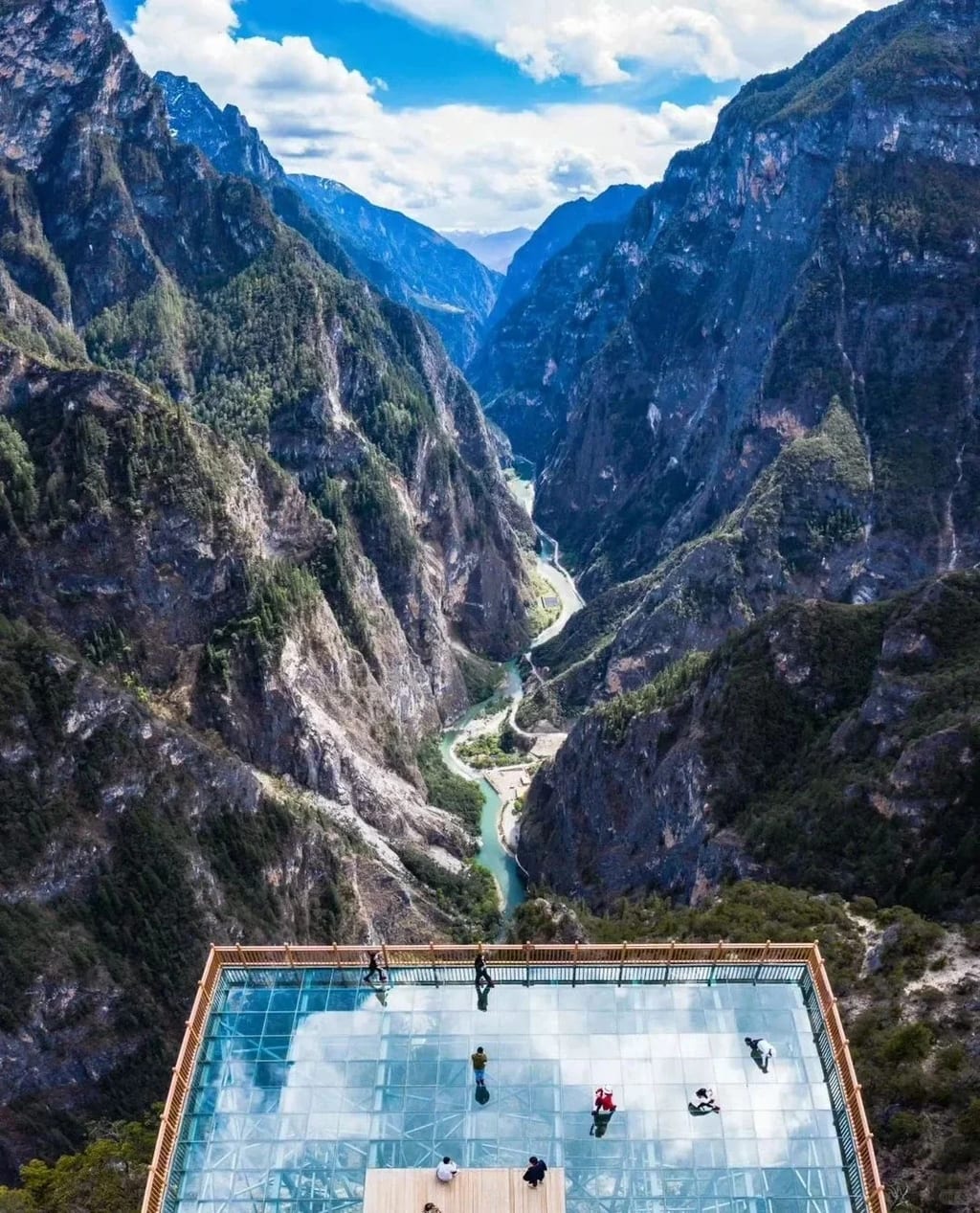
Above Shangri-La Grand Canyon , the Echo Wall is one of Balagezong ’s memorable viewpoints. Surrounded by cliffs, forests, clouds, and snow-capped peaks, it captures the wild, sacred atmosphere that makes the area feel hidden away.
Its signature feature is the natural echo effect : call toward the cliff, and your voice rebounds through the valley before returning. The result is a striking interaction with the landscape —transforming the canyon from something you look at into something you experience.
The Echo Wall is usually visited together with the cliffside glass skywalk and panoramic viewing platform. The glass walkway adds a gentle sense of adventure, letting visitors look down into the valley and forest beneath their feet while taking in the dramatic scale of the canyon.
A typical visit takes around 30–60 minutes . From here, guests can enjoy three standout views: the dramatic depth of the canyon , the layered mountain forests , and the distant snow-mountain backdrop.
Shangri-La Grand Canyon (Balagezong)
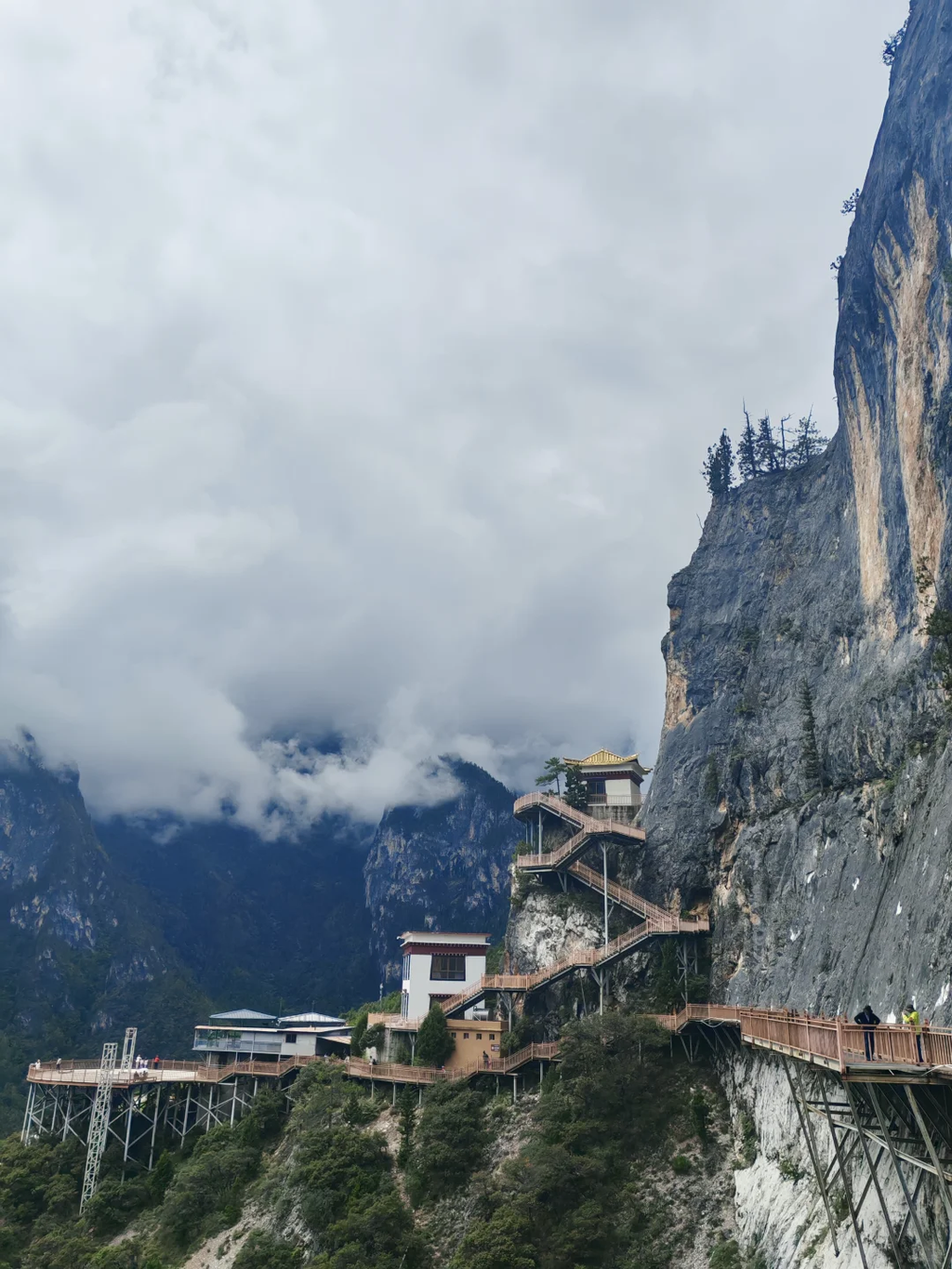
Shangri-La Grand Canyon is Balagezong’s signature landscape , combining snow-capped peaks , sheer cliffs , rivers, forests, villages, and sacred mountain culture . As the heart of Balagezong, the canyon feels immense and wonderfully secluded .
The landscape drops from Balagezong Mountain’s summit (about 5,545 m ) to the valley floor. Views unfold in layers of mountains, rock, water, and forest. Canyon walls, gorges, and vegetation create depth and scale —especially when sunlight cuts across cliffs or mist drifts through the valley.
The canyon’s layered terrain— “canyons within canyons” —is distinctive. Instead of a single valley, it unfolds into gorges, where mountains, rivers, and cliffs form a textured landscape. Visitors follow walkways, listening to water and echoes while taking in bends, stone formations, slopes, and sheer walls.
Shangri-La Grand Canyon feels like a gateway into a hidden world . Shaped by villages, peaks, and legends, it carries a spiritual atmosphere. For travelers seeking deeper Shangri-La, the canyon offers natural power, cultural mystery , and highland beauty.